Willow & Ember

Our Practices

Operations & Systems.quietlyrun.

The business already has

a rhythm. visible.

Most owners we meet are the operating system of their own business. Every exception, every judgment call, every quiet fix at 9pm on a Tuesday. We map how the work actually flows, write it down in language your team recognizes, and turn what you've been carrying into something the business owns.

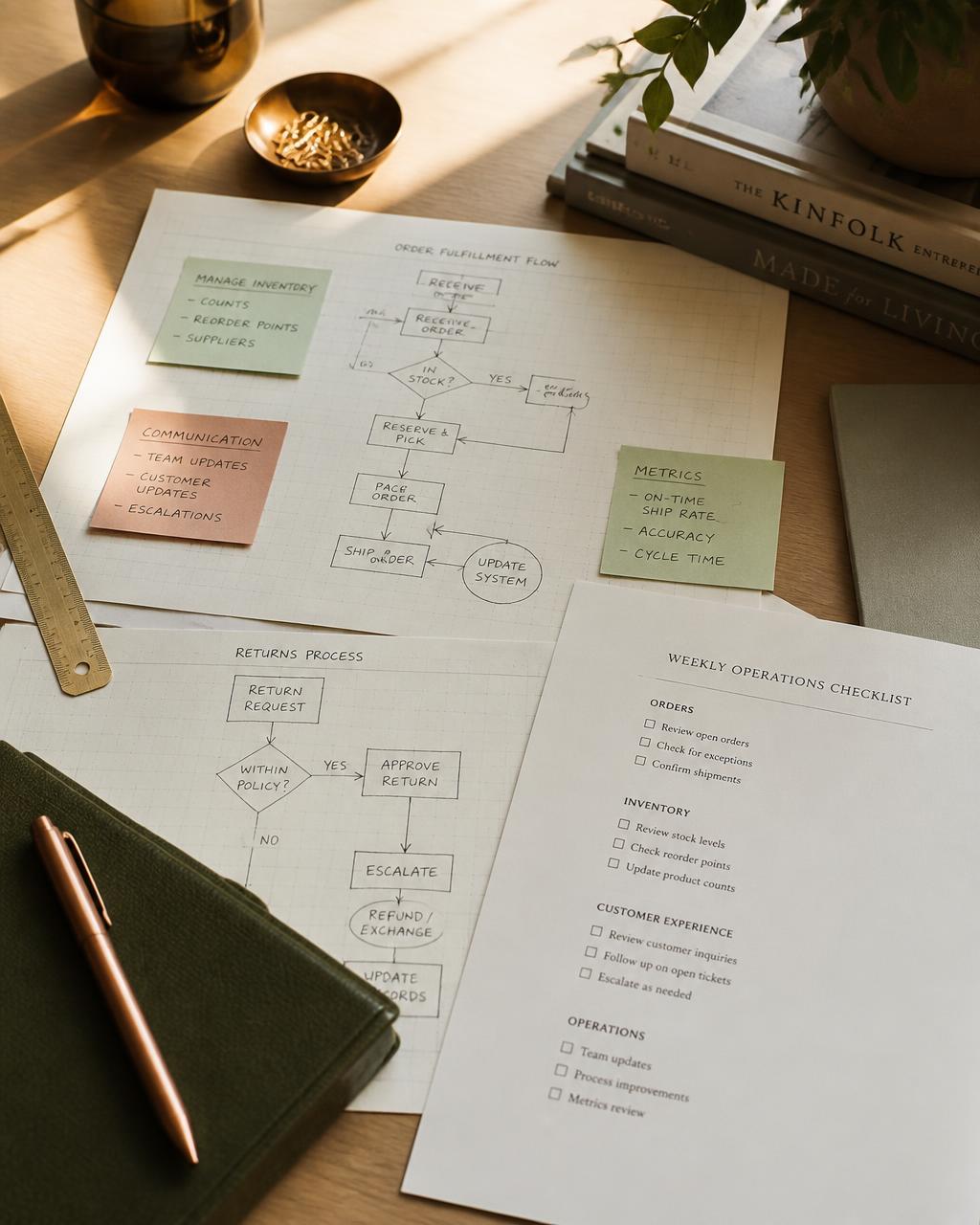
Hand-drawn workflow maps and a weekly operations checklist on a warm cream desk
01

Map the real work

Not the process chart from three years ago. The one people use today.

We start by following the work as it actually moves. Who decides what, where things stall, and which tasks quietly depend on one person's memory. The real map is always more interesting than the official one.

What this looks like

  • Shadow the workflows that matter most
  • Name the handoffs that break first
  • Capture the exceptions before they become emergencies
02

Write it in their language

Documentation only works if the team opens it without dread.

We turn the map into playbooks your people recognize. Short, scannable, honest about judgment calls, and written for the person doing the work, not the person reviewing it.

What this looks like

  • Plain-language SOPs, not corporate manuals
  • Decision rules that preserve good judgment
  • A single source of truth that stays current
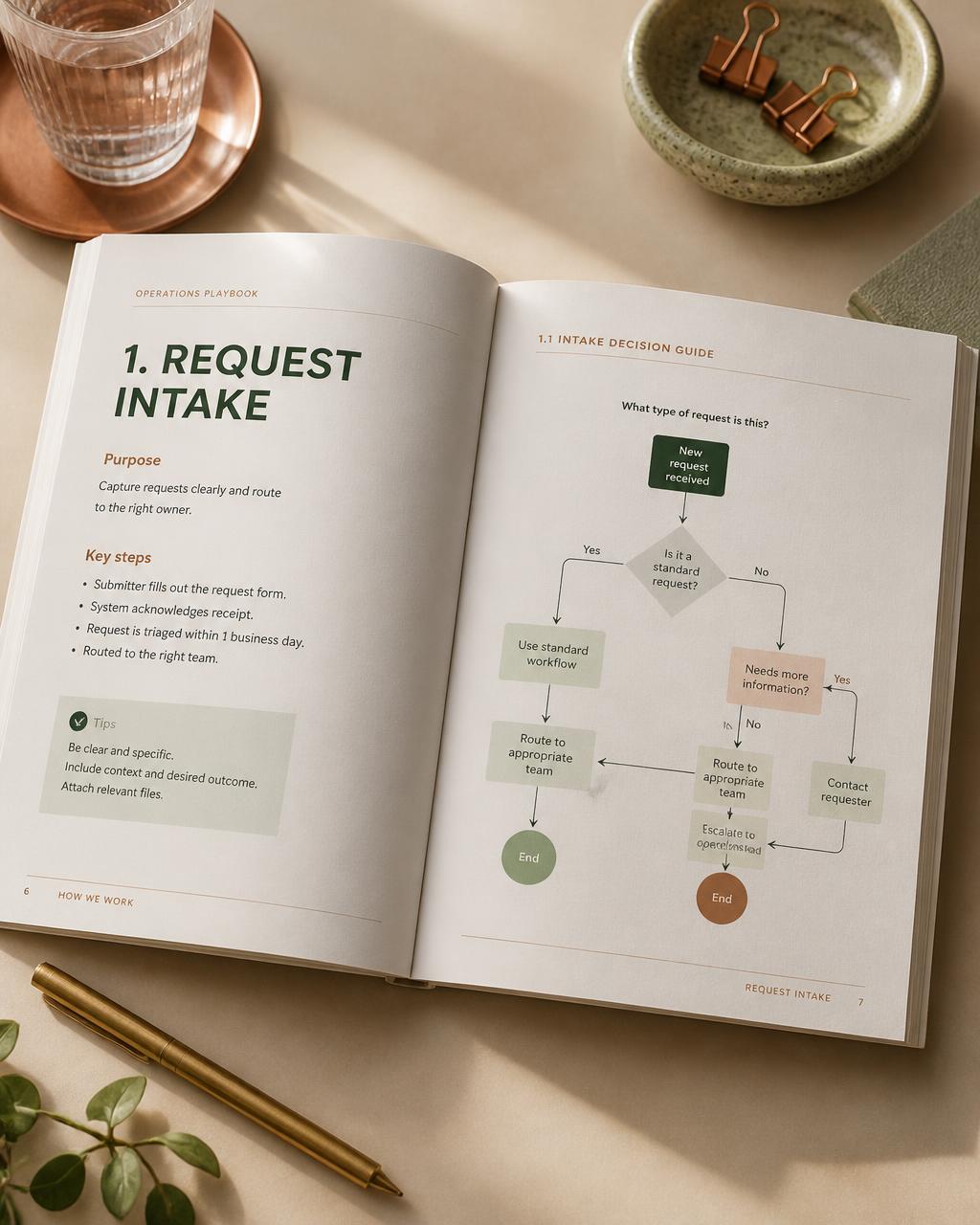
An open operations playbook with plain-language headings and a simple decision flowchart

The best playbook is the one a new hire can follow on a hard day.

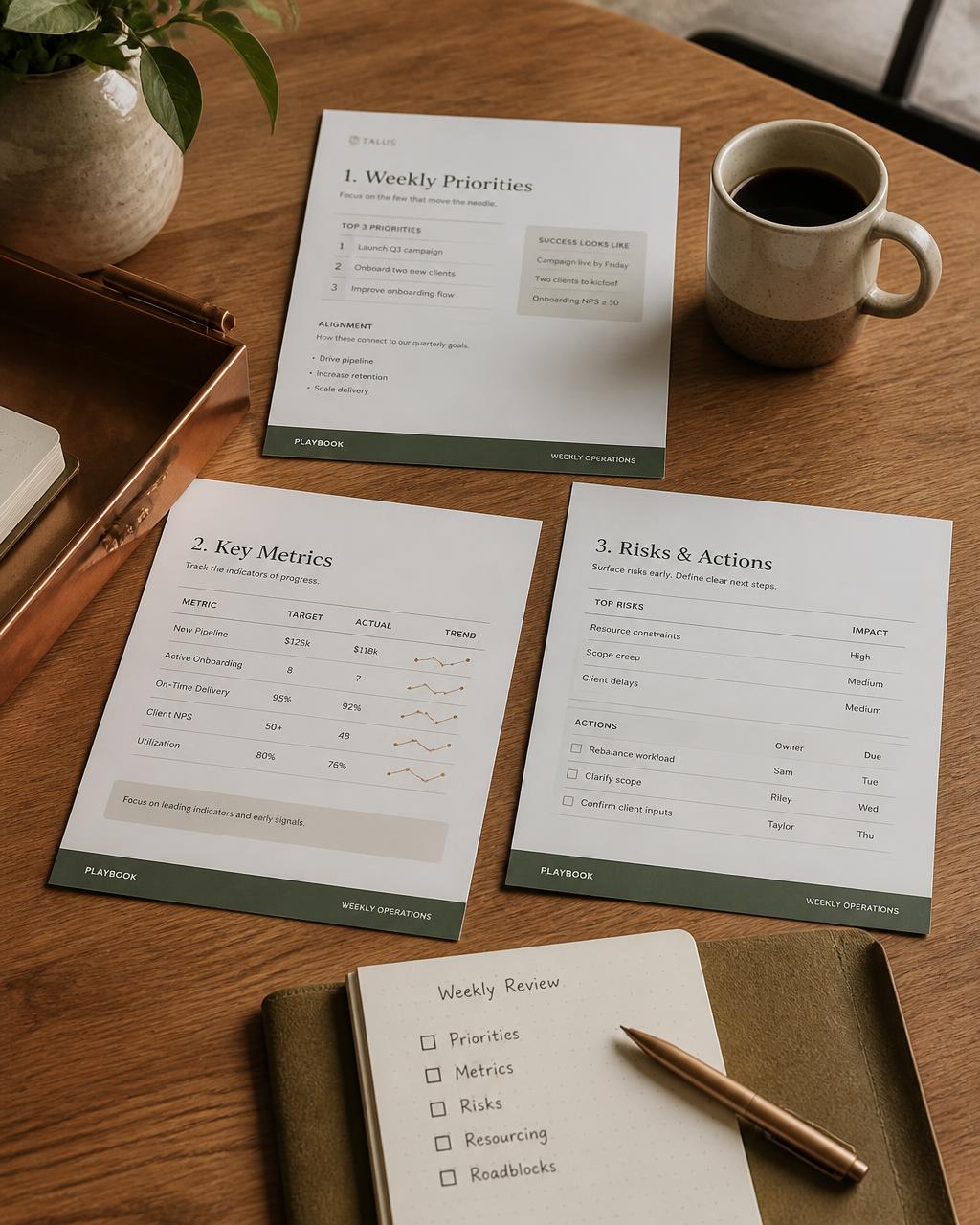
Weekly operations review playbooks and a simple checklist on a warm oak table
03

Make it live

A system that ages on a shelf is not a system. It is a souvenir.

We build the habits that keep the documentation alive. Weekly reviews, ownership, and a simple maintenance rhythm so the system keeps pace with the business.

What this looks like

  • Clear ownership for every workflow
  • A lightweight review cadence
  • Training as the system changes, not after

When the system is clear, the owner stops being the shortcut. The team knows what to do, and you get to lead instead of rescue.

An open invitation

Let's talk.

An hour on a call. No pitch, no proposal deck. You leave with a clearer read on your business, whether we work together or not.